


Noticing eye discomfort first thing in the morning can be frustrating and concerning. Waking up with dry eyes often feels like a gritty, burning, or irritated sensation that may improve after blinking, or may linger throughout the day. While morning dryness is common, it can stem from a variety of factors, ranging from temporary environmental conditions to underlying ocular surface concerns.
Understanding why dryness occurs overnight can help clarify when symptoms are minor and when they may indicate a need for professional evaluation.
What Happens to the Eyes During Sleep
Several normal changes take place during sleep that can affect eye comfort. Tear production naturally decreases, blinking stops, and the eyelids become the primary protection for the ocular surface. If the eyelids do not fully close or the tear film lacks stability, moisture can evaporate more quickly than usual.
Because of these changes, the eyes may feel dry, irritated, or blurry immediately upon waking, even if they felt comfortable the night before. This combination of reduced tear production and limited eyelid protection helps explain why some people experience dry eyes upon waking up, even if their eyes feel comfortable during the day.
Waking Up With Dry Eye Symptoms
People who notice eye discomfort in the morning may experience a range of sensations, including:
- A gritty or sandy feeling in the eyes
- Burning or stinging
- Redness
- Temporary blurred vision that improves after blinking
- Sensitivity to light
Occasional symptoms that resolve quickly are often linked to sleep environment or short-term dryness. When discomfort persists or worsens, it may reflect changes in tear quality or ocular surface health.
Why Are My Eyes Dry in the Morning?
Morning dryness is rarely caused by a single issue. Instead, several contributing factors often overlap. Incomplete eyelid closure during sleep can leave part of the eye exposed to air overnight, increasing tear evaporation. Dysfunction of the meibomian glands, which produce the oily layer of tears, can also reduce tear stability and allow moisture to escape more quickly.
According to the American Academy of Ophthalmology, dry eye disease is commonly associated with an unstable tear film that fails to adequately protect the eye surface. Environmental airflow, low humidity, and reduced tear quality can all worsen overnight dryness when combined with normal sleep-related changes.
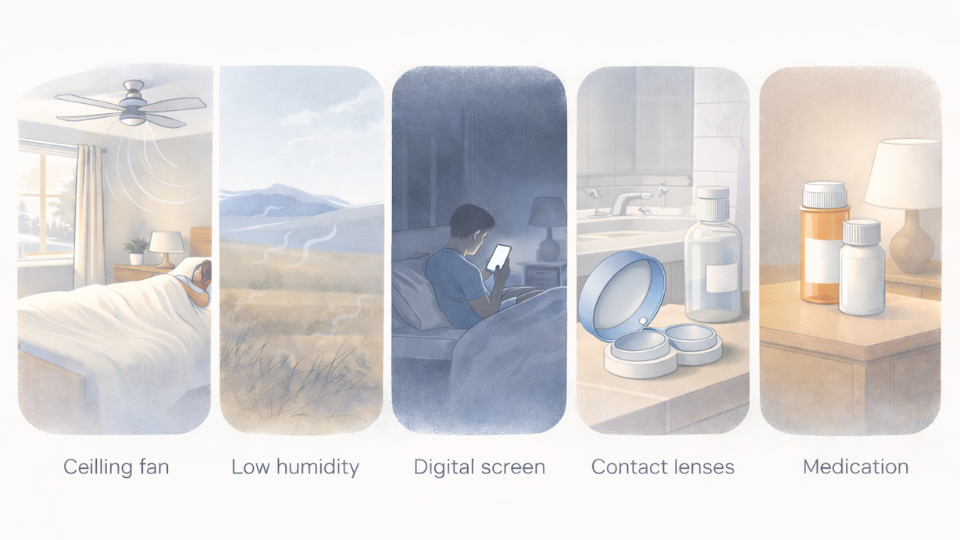
Common Morning Dry Eye Causes
Several everyday factors may contribute to morning eye dryness, including:
- Sleeping with fans, heating, or air conditioning directed toward the face
- Low indoor humidity
- Prolonged screen use before bedtime
- Contact lens wear habits
- Certain medications, such as antihistamines or blood pressure medications
Systemic health conditions and hormonal changes may also influence tear production, increasing the likelihood of morning discomfort.
Dry Eyes in the Morning vs. Chronic Dry Eye
Waking up with dry eyes can feel similar to chronic dry eye disease, but the two are not always the same. Understanding the difference helps patients recognize when symptoms are temporary and when ongoing care may be needed.
Dry Eyes Related to Morning Conditions
Morning-related dryness is often occasional and may improve shortly after waking. It is commonly influenced by sleep environment, overnight tear evaporation, or temporary changes in eyelid closure. Symptoms may resolve after blinking or using artificial tears and do not always persist throughout the day.
Chronic Dry Eye Disease
Chronic dry eye involves ongoing imbalance in tear production or tear quality, with symptoms such as irritation, burning, fluctuating vision, or light sensitivity that may persist throughout the day. The Cleveland Clinic notes that this long-term condition can affect daily comfort and visual quality when left untreated, often requiring professional evaluation and personalized care.
When to Seek Professional Eye Care
Morning dryness that resolves quickly may not be cause for concern. However, an eye evaluation is recommended when:
- Waking up with dry eyes occurs most mornings
- Dryness persists throughout the day rather than improving after blinking
- Redness, irritation, or eye pain accompanies dryness
- Light sensitivity or vision changes develop
- Over-the-counter treatments provide little or no relief
Identifying the underlying cause early can help prevent progression and support long-term eye health.
Understanding and Addressing Morning Eye Dryness
Waking up with dry eyes is a common experience, but it is not something to ignore, especially when symptoms are frequent or persistent. While temporary dryness is often related to sleep habits or environmental factors, ongoing discomfort may reflect changes in tear quality or ocular surface health that benefit from professional evaluation.
If you have questions about your eye health or would like to schedule an evaluation, Rocky Mountain University Eye Institute provides comprehensive, patient-focused eye care in Provo and Salt Lake City, Utah. If you’re experiencing ongoing discomfort, you can schedule your visit through our online scheduling tool or contact our team to get the care you need.