
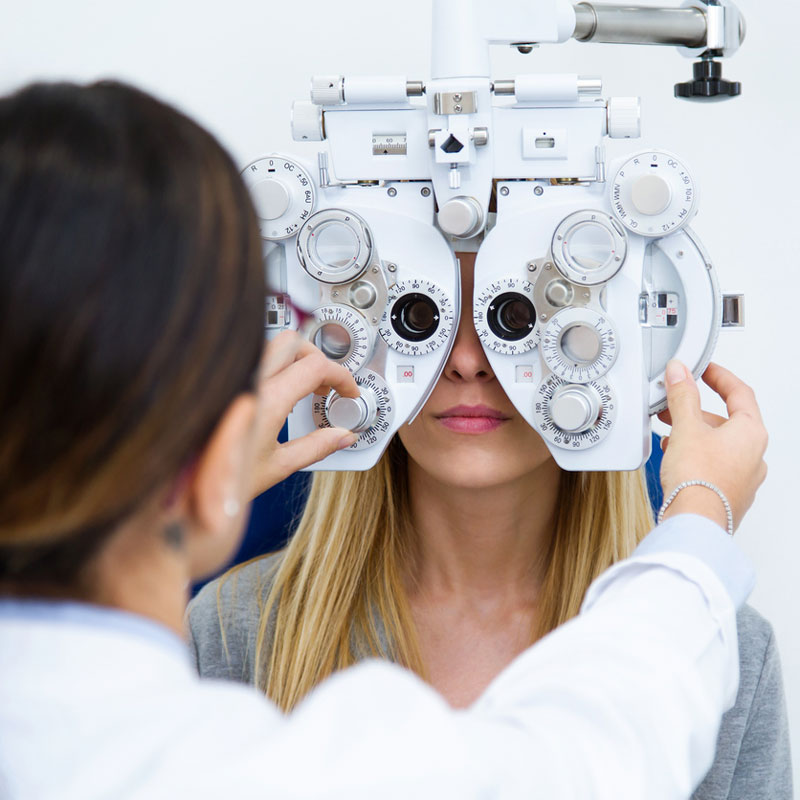
Low Vision Care in Utah for Greater Visual Independence
In the Clinic for Vision Enhancement and Rehabilitation, a team of doctors, occupational therapists, and student clinicians focus on the visual needs and interests of school-aged children and adults with congenital or acquired visual deficits. We work hand-in-hand with parents and family members, teachers, driving instructors, and other professionals to ensure your visual needs are addressed. For those with no light perception or whose remaining vision does not benefit from enhancement, we provide white cane training and will help you access community resources such as the Utah State talking book library and the Utah Council of the Blind. We are here for you, to help you with your visual needs.
Low-vision care occurs when traditional glasses, contacts, or surgeries no longer provide clear vision. At the Rocky Mountain University Eye Institute’s Clinic for Vision Enhancement and Rehabilitation, we help children, teens, and adults with significant visual loss regain confidence in daily life. Whether caused by genetics, aging, or disease, we offer practical solutions, assistive devices, and compassionate support to help patients live fully and independently.
- Personalized care for children, adults, and seniors with low vision
- Evaluation and treatment for conditions like macular degeneration, glaucoma, and optic nerve disorders
- Assistive devices, training, and support from a team of specialists
- Serving Provo, Orem, Lehi, Springville, and surrounding areas
How Low Vision Rehabilitation Works
Your Vision. Your Goals. Our Support.
Low vision care begins with a thorough evaluation by our multidisciplinary team, including doctors, occupational therapists, and student clinicians. We assess how your remaining vision can best be used, and offer tools like magnifiers, filters, digital devices, and software. For those with little to no vision, we provide white cane training and help connect patients with local resources like the Utah State Library for the Blind and the Utah Council of the Blind. Our goal is to meet you where you are and help you move forward confidently.
Who Can Benefit from Low Vision Services?
Support for All Ages, All Conditions
Our clinic helps both children and adults living with visual impairment caused by:
Children & Teens: Ocular albinism, achromatopsia, Stargardt disease, optic nerve hypoplasia, retinitis pigmentosa
Adults: Age-related macular degeneration (AMD), glaucoma, diabetic retinopathy, vision loss from stroke
Whether congenital or acquired, we provide visual enhancement strategies, classroom support tools, and daily living adaptations that match the patient’s needs and goals.
Personalized Vision Tools & Techniques
Empowering Independence Through Innovation
Each treatment plan is tailored to the patient’s condition, lifestyle, and vision level. Tools and training may include:
Optical Devices: Magnifiers, telescopes, filters, high-contrast aids
Technology: Digital magnifiers, screen readers, accessible software
Training: Eccentric viewing, central scotoma management, reading enhancement techniques
Support Services: White cane training, referrals to community resources, and home-based strategies
We work closely with families, teachers, and support professionals to build a plan that truly works—for school, work, and life.
Child and Adolescent Vision Enhancement and Rehabilitation
Stargardt disease, retinitis pigmentosa, achromotopsia, ocular albinism, and optic nerve hypoplasia are some of the conditions that can cause severe visual impairment in children and adolescents. We provide various services for pediatric patients with reduced vision.
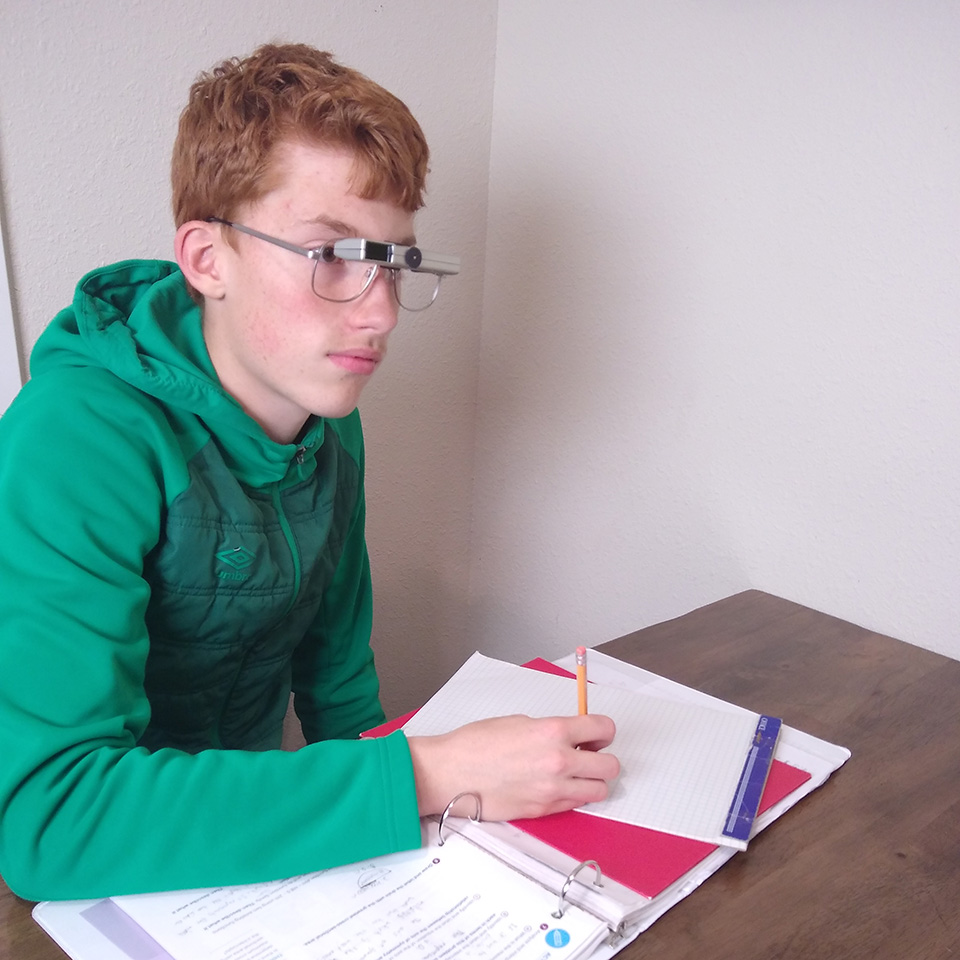

Ocular Albinism
Ocular albinism, achromatopsia, and other congenital retinal conditions cause reduced acuity, nystagmus, and light sensitivity. Telescopes, digital magnifiers, filters, and software can prove beneficial in helping individuals with these conditions.
Classroom Visual Needs
Students with reduced vision need timely and effective visual enhancement and assistive services. Most children and adolescents adapt quickly to utilizing their vision with assistive devices. If given the correct tools, training, and support many students can manage their reduced vision well. As part of the child and adolescent exam, we will test maximum reading speed and calculate the magnification needed to achieve this.

Adult Vision Enhancement and Rehabilitation
Age-related macular degeneration, glaucoma, diabetic retinopathy, and stroke are some of the conditions that can cause severe visual impairment in adults.
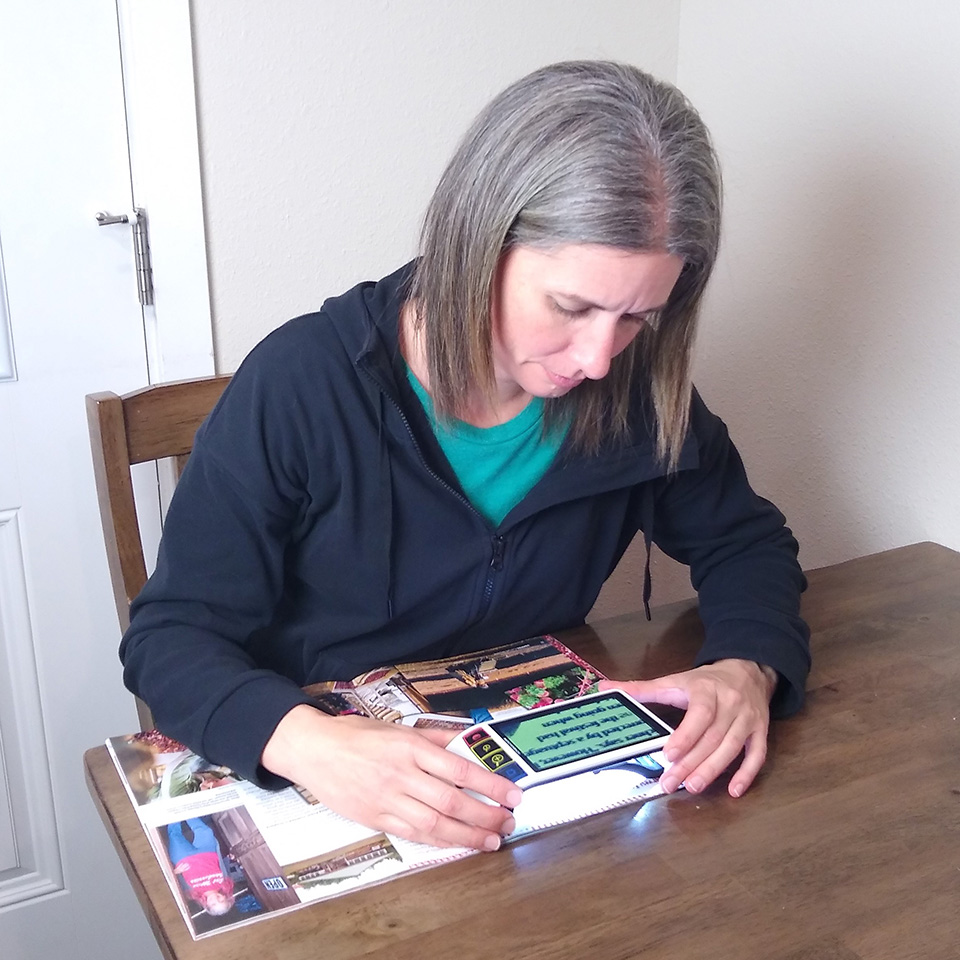
Age Related Macular Degeneration
Age-related macular degeneration (AMD) can cause severe vision loss by damaging the area of the eye responsible for our detailed vision called the macula. Macular degeneration can be severely disabling as patients lose their ability to drive, recognize faces, and read. Magnification or larger print size along with eccentric viewing training prove beneficial in helping these patients.
Reading with a Central Scotoma
Many individuals with AMD develop a central blind area that we call a scotoma. Perceptual filling-in can cause the scotoma to not be visible. A less visible scotoma may result in the placement of text in a non-ideal location relative to the scotoma. During our assessment and training of patients with AMD, we will determine whether the scotoma is in a non-ideal location and train the patient accordingly.

Frequently Asked Questions
What is low vision and how is it different from blindness?
Low vision is a significant loss that can’t be corrected with glasses, contacts, or surgery. Unlike total blindness,
people with low vision still have some usable vision that can often be enhanced with special tools or techniques.
What conditions can cause low vision?
Common causes include macular degeneration, glaucoma, diabetic retinopathy, retinitis pigmentosa, optic nerve
disorders, and stroke-related vision loss. Children may also be affected by conditions like ocular albinism or
Stargardt disease.