
Preguntas frecuentes

Instituto General de Ojos
¿Por qué debo hacerme un examen en el Instituto Oftalmológico RMU?
Nuestros médicos optometristas del Instituto Oftalmológico RMU, reconocidos a nivel nacional, garantizan una atención y un tratamiento óptimos para ti y tu familia.
¿Qué puedo esperar durante mi examen de la vista?
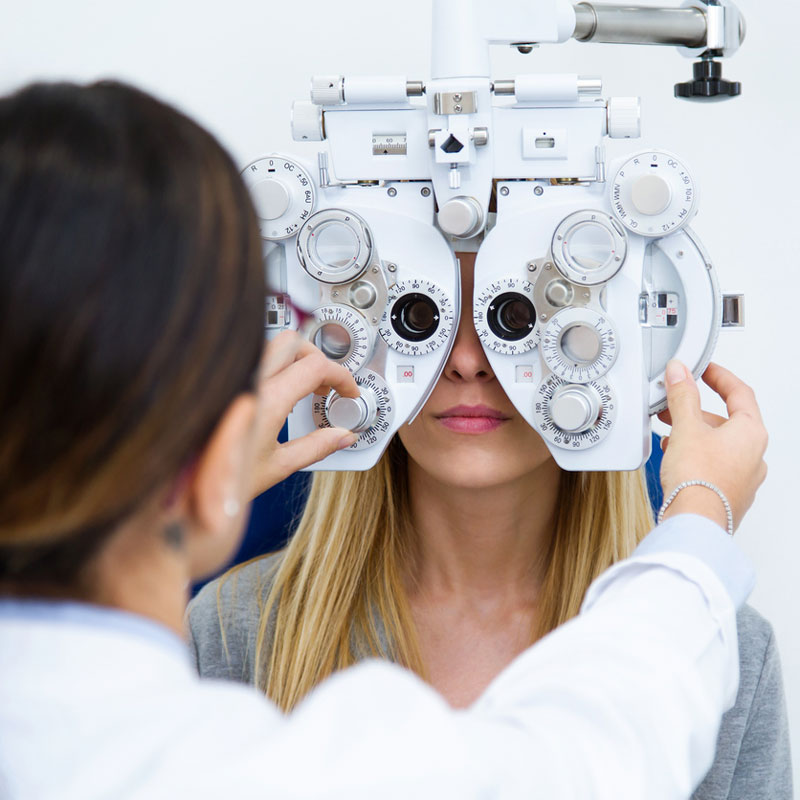
Durante el proceso de su examen, nuestros optométricos revisarán su información personal y verificarán sus resultados. Tu médico de la facultad evaluará personalmente la salud de tus ojos y buscará signos de enfermedades sistémicas en el ojo, cataratas, glaucoma, degeneración macular o factores de riesgo para el desprendimiento de retina. Esto también te dará la oportunidad de hacer preguntas a un experto.
El examen está diseñado para detectar una amplia variedad de problemas que afectan a la función visual y que causan visión borrosa y molestias oculares. También se realizan evaluaciones para trastornos oculares.
En todo el proceso de examen se utiliza tecnología punta.
¿Aceptáis derivaciones?
Sí, incluyen derivaciones para terapia visual, rehabilitación de baja visión, adaptación de lentes de contacto especiales, enfermedades oculares, pruebas especiales y gestión pre y postoperatoria de cirugía de cataratas, cirugía láser para la diabetes y LASIK.
¿Cómo debería prepararme para que me dilaten los ojos?
La dilatación pupilar permite al médico ver la parte interna del ojo, pero los efectos secundarios pueden dejar la visión borrosa y sensible a la luz durante hasta 2 horas o más. Se recomienda que un amigo o familiar proporcione transporte tras la dilatación del alumno hasta que los alumnos vuelvan a su tamaño original.
¿Puedes atender las preocupaciones oculares de una persona con discapacidad?
¡Sí! Tenemos formas objetivas especiales de evaluar y tratar a personas de todas las capacidades.
¿Cuál es el paciente más joven que ves?
Nuestro Servicio de Pediatría puede atender a recién nacidos, lactantes, niños pequeños y pacientes de hasta 17 años.
¿Puedo rellenar los formularios de mi paciente antes de ir a mi examen?
Sí, visita la sección de Recursos para Pacientes en la página web.
¿Qué seguros acepta el Instituto Oftalmológico RMU?
Aceptamos tanto seguros de visión como médicos. Por favor, visita la página de Facturación y Seguros para los seguros aceptados.
¿Dónde aparco en el Instituto Oftalmológico RMU?
Habrá aparcamiento designado para pacientes en el aparcamiento principal del edificio 3. Busca el cartel que indica esas plazas de aparcamiento.
Exámenes oculares completos
¿Qué incluye un examen ocular completo?
¿Con qué frecuencia debo hacerme un examen ocular completo?
¿Qué diferencia hay entre un examen visual y un examen ocular completo?
¿Puede un examen ocular completo detectar otros problemas de salud?
¿Cuánto dura un examen oftalmológico completo?
¿Necesito un examen ocular completo si tengo una visión perfecta?
¿Dónde puedo reservar un examen ocular completo en Provo o Salt Lake City?
Atendemos pacientes en dos ubicaciones: 122 E 1700 S, Edificio 3 en Provo y 970 Emery St W en Salt Lake City. Llama al 385.248.5550 para reservar un examen ocular completo en la clínica que te sea más fácil de contactar.
Lentillas y lentes de contacto especiales
¿Cuál es la diferencia entre las lentes de contacto diarias y mensuales?
¿Es seguro usar lentes de contacto todos los días?
Sí, las lentes de contacto son seguras para el uso diario si se ajustan correctamente y se usan según las de tu profesional
Instrucciones. Es esencial seguir las pautas de higiene y cambiar las lentes según se recomiende para reducir el riesgo de infecciones oculares o irritaciones.
Las lentillas especializadas están diseñadas a medida para pacientes con afecciones oculares complejas como queratocono, córneas postquirúrgicas, ojos con cicatrices o astigmatismo irregular. Estas lentes ofrecen una visión clara y cómoda cuando las lentillas o gafas tradicionales no son efectivas.
¿Para qué se usan las lentes de contacto especiales?
¿Cómo sé si necesito lentillas especiales?
¿Puedo conseguir lentillas de color con graduación?
¿Funcionan las lentillas para el astigmatismo o la presbicia?
¿Dónde puedo conseguir pruebas de lentes esclerales o especiales en Provo o Salt Lake City?
Las adaptaciones de lentes especializadas y esclerales están disponibles en ambas clínicas: 122 E 1700 S, Edificio 3 en Provo y 970 Emery St W en Salt Lake City. Llama al 385.248.5550 y te reservaremos un médico que ajuste estas lentes regularmente.
Terapia visual y visión binocular
What is vision therapy and how does it work?
Vision therapy is a non-surgical treatment program that improves how the eyes move, focus, and work
together. It includes customized eye exercises and activities designed to train the brain and visual system to
work more efficiently.
What conditions can vision therapy treat?
How do I know if my child needs vision therapy?
What’s the difference between vision therapy and glasses?
Is vision therapy just for children?
How long does vision therapy take to see results?
Atención médica ocular
What’s the difference between a medical eye exam and a routine eye exam?
How often should I get a medical eye exam?
Can an eye doctor detect diabetes or high blood pressure?
What are the early signs of glaucoma or macular degeneration?
Is medical eye care only for seniors?
Will my insurance cover a medical eye exam?
Queratocono
What is keratoconus and how is it diagnosed?
What are the early symptoms of keratoconus?
Can keratoconus be cured?
What are scleral lenses and why are they used for keratoconus?
Is corneal cross-linking a safe option?
How often should I have my eyes checked if I have keratoconus?
Tratamiento para el ojo seco
What causes dry eye syndrome?
What is OptiLIGHT IPL treatment for dry eye?
What are serum eye drops, and how do they work?
Are dry eye treatments safe?
Can dry eye be cured?
How do I know which treatment is right for me?
Baja visión
What is low vision and how is it different from blindness?
Low vision is a significant loss that can’t be corrected with glasses, contacts, or surgery. Unlike total blindness,
people with low vision still have some usable vision that can often be enhanced with special tools or techniques.
What conditions can cause low vision?
Common causes include macular degeneration, glaucoma, diabetic retinopathy, retinitis pigmentosa, optic nerve
disorders, and stroke-related vision loss. Children may also be affected by conditions like ocular albinism or
Stargardt disease.
What types of tools or devices can help with low vision?
How can you help children with low vision succeed in school?
Can adults with macular degeneration or central vision loss still read or drive?
Do you offer support for patients with total or near-total vision loss?
Gafas
How do I know if I need new glasses?
You may need new glasses if you’re experiencing headaches, blurry vision, eye fatigue, or if it’s been over a year since
your last exam. Even without symptoms, annual check-ups help ensure your prescription is current.
What types of lenses do you offer?
Can you help me choose frames that suit my face?
Do you offer glasses for kids and teens?
How long does it take to get my new glasses?
Do you accept insurance for glasses and frames?
We accept most major vision insurance plans. Our team can help verify your benefits and explain what’s covered, including frame allowances and lens upgrades.
How do I care for my eyeglasses?
Soap and water or a commercial eyeglass cleaner with a soft cloth can be effective cleansers for your eyeglasses.
Atención visual sin cobertura
Who qualifies for free eye exams at RMU Eye Institute?
What is included in a pro-bono eye exam?
Can I get free glasses through RMU Eye Institute?
How do I apply for free vision care?
Where is the RMU Eye Institute located and when are you open?
We are at 122 East 1700 South, Bldg 3, Provo, Utah.
Our hours are Monday through Friday, 8:00 a.m. to 5:00 p.m.
Do I need a referral from a charity to get free vision care?
Preguntas frecuentes generales
What’s the difference between an optometrist and an ophthalmologist?
An optometrist (OD) is a licensed eye doctor who provides comprehensive eye exams, diagnoses and treats vision problems and eye conditions, and prescribes glasses or contact lenses. An ophthalmologist (MD or DO) is a medical doctor who specializes in eye surgery and advanced disease treatment. An optometrist can handle most routine and medical eye care needs.